
Piri Wein / ピリヴァイン
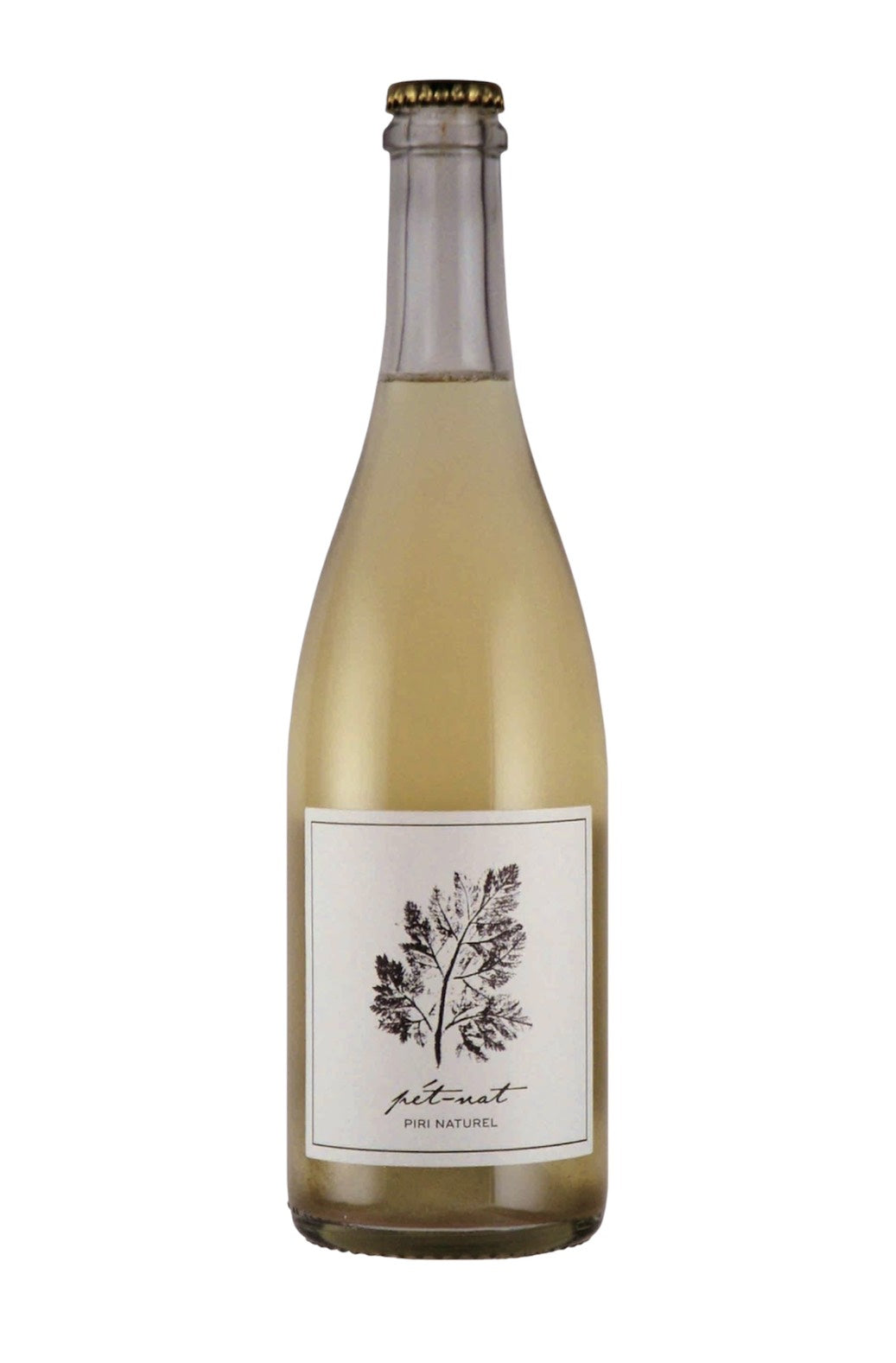
Pili Naturel Pet Nat
Pili Naturel Pet Nat
Couldn't load pickup availability
Free shipping for orders over ¥25,000 (tax included)
about shipping cost
about shipping cost
We will ship by Yu-Pack.
Hokkaido: 1,310 yen
Tohoku: 1,160 yen
Kanto: 1,160 yen
Shin-etsu/Tokai/Hokuriku: 1,250 yen
Kansai/Chugoku/Shikoku: 1,530 yen
Kyushu: 1,810 yen
Okinawa: 1,810 yen
Piri Naturel Pet Nat 2022
Region : Germany, Nahe
Grape : Scheurebe 90%, Müller-Thurgau 10%
Color : White, Pet Nat
A clear and sophisticated Pét-Nat with an exceptional level of naturalness.
A gentle green-yellow color with soft bubbles.
Refreshing aromas of lime, sweetie, and yellow apple.
Sharp acidity with fresh fruitiness, completely stable. Yet, the umami spreads slowly, making it incredibly drinkable, a characteristic unique to additive-free wines.

【Producer Information】
A female producer combining rich soil with centuries of history to open new doors for the future.
A new female producer has emerged from Rummelsheim village in the Nahe region of Germany. Christine Pieroth, known as Piri, is already attracting significant attention from discerning wine lovers across Europe. She comes from a family that has built its foundation as mixed farmers in this region for generations and will soon inherit the family's legacy.
She currently cultivates grapes and produces wine using a portion of the family's vineyards, adhering to her own farming and winemaking philosophies. She is becoming known under the brand names Piri Wein or Piri Naturel.
The Pieroth family's vineyards and winery are located in Rummelsheim village, 2 km south of the confluence of the Rhine and Nahe rivers. To the northeast, across the Nahe and Rhine rivers, one can see the vineyards of the renowned Rheingau region. As briefly explained in the overview of the Nahe region, Rummelsheim village is a microcosm of Nahe itself, characterized by a diverse and complex soil composition. Different grape varieties are planted in small parcels, and with varying soils, the resulting wines are incredibly diverse.
Piri's family has been mixed farmers in this region for several centuries. Winemaking has also been their livelihood, with a known history of a 1789 vintage bottle, indicating a deeply rooted winemaking tradition. Until the 1960s, they operated as mixed farmers, growing potatoes and wheat, and raising cattle and pigs, in addition to viticulture and winemaking. However, as times progressed, they focused on winemaking, maintaining 15 hectares of vineyards.
Piri also cultivates vegetables and herbs herself, showing keen observation and insight. She uses leaves from the herbs and plants she grows, designing them in a printmaking-like manner and digitizing them for her wine labels, which suggests her interest in plants in general, not just winemaking. She prefers to incorporate vegetables and herbs from her own garden into her daily life as much as possible, which naturally intertwines with her wine philosophy and background, guided by her respect and love for the surrounding natural environment, and this is well-expressed in the wines she produces. It seems Piri has strongly inherited the ancestral blood of the Pieroth family.
Piri, who grew up with wine from an early age, learned that the most important thing for wine is to enjoy working in the vineyard and cultivating the vines; cellar work comes second. However, perhaps because wine was too close to her, or because she spent too much time with it, and also being very curious, she once decided to step away from wine and forget about it. She moved to Canada to experience the outside world.
Yet, even there, she encountered beautiful vineyards that captivated her, leading her to realize that her true path lay with grapes and vineyards. She returned to Germany to pursue winemaking.
After returning, she studied at Geisenheim University and interned at the renowned Weingut Keller in Rheinhessen, where she trained her palate by tasting a vast number of wines.
While her true first vintage was 2018, her first commercial release as Piri was in 2019. The wines making their debut in Japan this time are effectively her third winemaking vintage. Piri's philosophy is encapsulated in her passionate words (below):
『While organic farming allows the use of copper and sulfur in the vineyard, I want to and do use far less than the permitted amounts.
Even though they are permitted, instead of using copper and sulfur, I largely spray the vineyards with natural tonics I collect and extract myself from ivy, nettles, horsetail, and mugwort that grow in and around the vineyard. I believe this method helps the vines grow stronger and more robust. Additionally, I've recently started using milk whey from local cheesemakers, and I'm also making my own compost to become a specialist in Probiotics in the future. I believe that each of these small steps will eventually come together to form a large, beautiful picture.
A significant part of the work, literally the foundation and essence of our work, is approaching the land, or the vineyard. It is especially important to connect, build relationships, and communicate with the microorganisms living in the vineyard and soil. I consider the vineyard a meadow where many wildflowers and herbs grow, a home not only for grapevines but also for many wild animals, insects, and plants. For animals, it is a shelter, a nest, and a dining hall. If we simply provide the opportunity, different plants and animals will naturally grow in different environments, even in the small parcels of this village.
I believe that cultivating and maintaining what I call a "meadow" is not just the responsibility of farmers but of all humanity. Now, and in the past, many seeds have been sown and harvests have already begun around me.』
※Probiotic: Derived from "probiosis," meaning the coexistence of living organisms, it is the antonym of "antibiotics." It refers to live microorganisms, such as lactic acid bacteria, bifidobacteria, and natto bacteria, that improve the balance of intestinal flora and bring beneficial effects to health, as well as foods and medicines containing them.