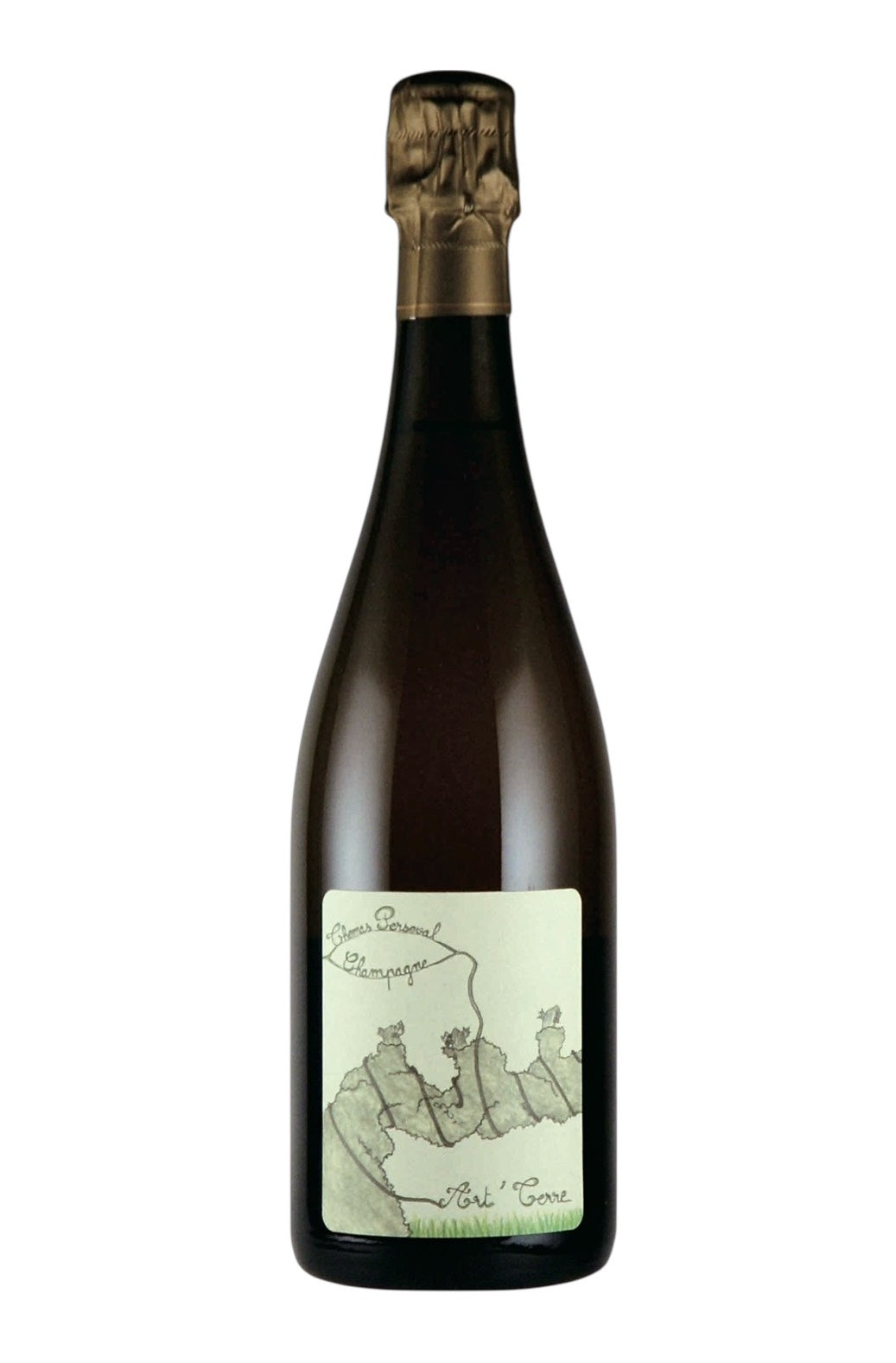

Thomas Perseval / トーマ・ペルスヴァル
Art Terre
Art Terre
Couldn't load pickup availability
Free shipping for orders over ¥25,000 (tax included)
about shipping cost
about shipping cost
We will send it by Yu-Pack.
*Free shipping for purchases over 19,000 yen.
Hokkaido: 980 yen Tohoku: 830 yen Kanto: 830 yen Shinetsu/Tokai/Hokuriku: 920 yen Kansai/Chugoku/Shikoku: 1,200 yen Kyushu: 1,480 yen Okinawa: 1,480 yen
All items will be sent by cool delivery from May to October.
(*During this period, the above shipping fee will be charged + 330 yen.)
Please note that due to the nature of the wine, regular shipping will not be available during this period.
Art Terre 2021
Region: Champagne, France
Grape: Pinot Noir 40% Pinot Meunier 40% Chardonnay 20%
Category: Champagne
Thomas Perceval's limited edition champagne has arrived for the first time!
This is a limited edition cuvée that was produced in small quantities and was difficult to obtain.
There is probably no other producer in Champagne that can produce such a natural wine with such a high level of flavor. Be sure to have a bottle for a special occasion.
Immediately after opening, a refreshing aroma reminiscent of medicinal herbs and a voluminous aroma like light cream cheese emerge .
The bubbles are very rich and have a distinct minerality.
The name of the cuvée is a play on the French word "Artere" (artery).
Three varieties grown mainly on gently sloping fields facing northeast are fermented and aged in wooden barrels.
Tirage in September 2022, secondary fermentation and aging in the bottle. Unfiltered and unfined.

[Producer information]
In the 1er Cru village of Chamery, at the foot of the northwestern Montagne de Reims, Thomas Perceval produces 12,000 to 14,000 bottles of champagne per year from his 2.5 hectare vineyard. There are just under 30 producers in the village, but only four, including him, practice organic farming.
For generations, the family has been a diversified farming family, cultivating grapes and growing around 60 hectares of grain (wheat and corn). In the 1960s and 1970s, Thomas' grandfather was part of a cooperative and sold grapes to the cooperative. In 1986, his father took over and left the cooperative, and the family began making champagne in-house for the first time. Incidentally, the current head of the family, Thomas, also owns 50 hectares of wheat, which is of course organic and sold to the cooperative.
After graduating from agricultural school in Avize, Thomas gained experience at an organic winery in Burgundy before returning to the winery in 2004 to help his father. He began cultivating the soil with a small tractor and a tool for weeding the grape turnips. He then cultivated the vines without using herbicides. In 2008, he introduced biodynamic farming methods using Pesticides No. 500 and No. 501. After carefully observing the soil for several months, he noticed that weeding the vines at the root level a few centimeters below the surface completely killed the weeds, drying out the soil and reducing the number of earthworms and small insects. He then changed his weeding method, cutting the weeds at a height of about 15 cm above ground to maintain soil moisture. During the summer, when rainfall is sparse, he refrains from weeding and instead allows the weeds to cover the ground, maintaining a moderate level of moisture in the soil. He strives to cultivate the vines with care, striving to cultivate "living soil." The biodynamic approach is then strengthened with nettles, horsetail and dandelions.
The vineyard consists of seven plots, approximately 50% of which are used for traditional vineyards: 33% Pinot Noir, 33% Pinot Meunier, 30% Chardonnay, and a small amount of Petit Meslier, Arbanne, and Pinot Blanc. They also produce a small amount of Coteaux Champenois. Ecocert certified in 2012. Harvesting is generally done in the morning to allow the grapes to begin alcoholic fermentation at a cooler temperature.
In terms of brewing, he followed his father's methods until the 2011 VTG, but from 2012 he shifted to a brewing method that he himself believes is best.
(For example, starting with the 2014 VTG, the pressed juice is transferred directly to wooden barrels for alcoholic fermentation and aging in the same barrels. Also, starting this year, all cuvées are alcoholically fermented using only natural yeast. Remiage (bottling) is also done by hand, with the bottles being shaken twice a day for 15 days.)
The average grape yield is 50-65hl/ha. The wine is pressed using a traditional vertical press from the Champagne region. After an overnight débourbage, the wine is placed in wooden barrels and fermented with natural yeast. Lactic acid fermentation is left to occur naturally, but because the grapes are well ripe, there is little malic acid. As a result, lactic acid fermentation is likely to occur, and since the barrel aging period before tirage is long (8-11 months), lactic acid fermentation often occurs during this time.
During tirage, only a single vintage is bottled without blending with reserve wines, and the secondary fermentation and aging period in the bottle is approximately two years. Regarding disgorgement, "Tradition" and "Grande Cuvée" are basically non-dosage, and the total SO2 content rarely exceeds 25mg/L.
Each cuvée is comparable in quality to the wines of other popular and famous producers.