
カムイ・メトッ・ヌプリ
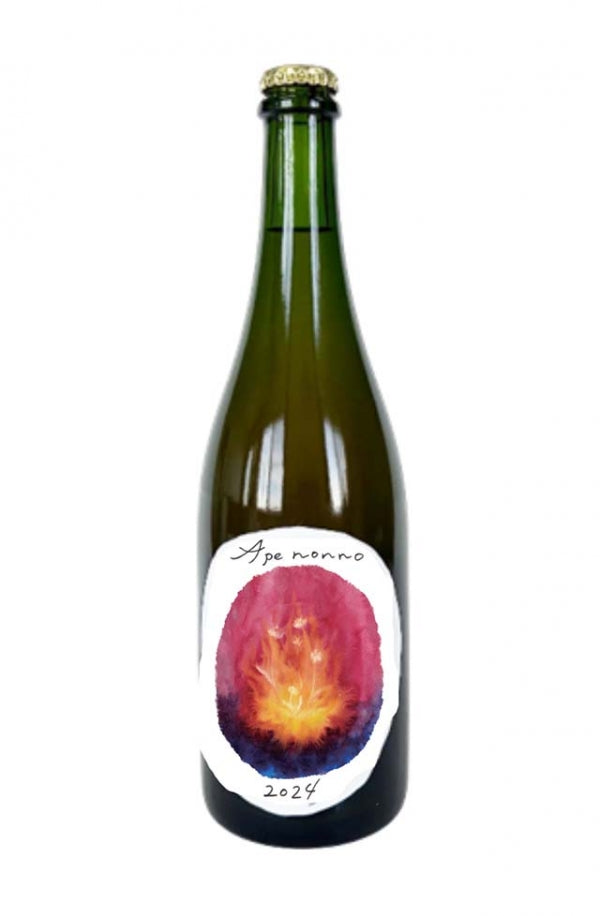
Ape Nonno
Ape Nonno
Couldn't load pickup availability
Free shipping for orders over ¥25,000 (tax included)
about shipping cost
about shipping cost
We will ship by Yu-Pack.
Hokkaido: 1,310 yen
Tohoku: 1,160 yen
Kanto: 1,160 yen
Shin-etsu/Tokai/Hokuriku: 1,250 yen
Kansai/Chugoku/Shikoku: 1,530 yen
Kyushu: 1,810 yen
Okinawa: 1,810 yen
Ape Nonno 2024
Region: Kamifurano, Hokkaido
Grape: Yamasachi
Color: Red
The Yamasachi red, acclaimed as the best ever, is here for a limited time!
A refreshing aroma of strawberries, apples, raspberries, and pink grapefruit.
Characterized by a charming fragrance reminiscent of small red flowers.
Notes of dried flowers, dried herbs, and spice from oak barrel aging are also excellent.
Despite its dark color, it's as easy to drink as a rosé.
Enjoy it as either a red or a rosé!
100% wild yeast. No added SO2. No chaptalization or acidification.
Unfiltered. No fining agents.

【Producer Information】
Winemaking in harmony with nature and spirit
Tokapuchi is Japan's largest organic farm, spanning 370 hectares across four locations in Hokkaido, aiming to cultivate crops that are safe for future generations to eat and to create an environment where people can live with peace of mind.
They are undertaking cyclical agriculture that heals the earth through biodynamic farming, and their flour is used by many famous bakeries across Japan.
Now, Tokapuchi has ventured into winemaking.
“Kamuy Metok Nupuri,” meaning "ridge of the mountain with a divine spirit" in the Ainu language, refers to the Tokachi mountain range.
True to their corporate philosophy, they cultivate grapes according to strict biodynamic farming methods.
They learned strict natural winemaking—no added SO2, fermentation with wild yeast, no chaptalization or acidification, unfined and unfiltered—through contract brewing and training at 10R Winery in Iwamizawa City.
Their own winery opened in 2023.
They use natural materials for storage containers in their own cellar.
They explore techniques such as cold maceration and carbonic maceration to bring out the characteristics of Yamasachi,
and are committed to producing wines that express the unique terroir of this land.
◤A rich space where all living creatures gather◢
To improve drainage in the vineyard, trees such as walnuts, white birches, and Itaya maples are planted around the field to design drainage and airflow. By planting flowering plants around the field, various insects and animals are attracted.
A rich ecosystem also prevents a massive infestation of only grape pests.
Rye is sown between the grape rows to break up the hardpan layer with its roots, allowing grape roots to penetrate deep into the soil.
Roots that extend deep into the soil absorb trace elements from the field, influencing the flavor of the fruit.
◤Topography and Climate of Tomihara Vineyard◢
Tomihara Vineyard, located in Kamifurano Town, is on a small, elevated hill with a southwest-facing slope on the eastern side of the Furano Basin, which is surrounded on three sides by the Daisetsuzan mountain range and the Yubari Mountains.
From spring to autumn, southerly winds blow through the mountain valleys, creating a continental climate with large daily temperature differences between day and night, and large annual temperature differences between summer and winter. Such a climate is considered suitable for grape cultivation, and in recent years, there has been less precipitation and longer sunshine hours during the growing season, leading to the production of concentrated, healthy, and high-quality fruit.
◤"Yamasachi" with hidden potential◢
The selection of grape varieties suited to the local climate and environment is important, based on the idea that creating a natural environment where grapes can coexist with the vineyard's ecosystem without stress leads to healthy and vibrant fruit.
Kamuy Metok Nupuri believes that Yamasachi, which has its roots in wild grapes native to Hokkaido, is the most suitable variety.
It has loosely packed berries, making it resistant to diseases, cold-hardy, and allows for flexible training methods as it does not need to be buried in snow during winter.
They partially employ a droop-type training method where the mother vine extends to the top wire of the trellis, and new shoots hang down from there. This method is close to the natural training of wild grapes, reduces stress on the grapevines, and also prevents damage from late frosts and animals.